

When you think of things in your body that are affected by food, the eyes may not come to mind. But the food you eat can affect your vision.


This article will provide some insight (pun somewhat intended) into how to protect your eyes by eating right!
Common Eye Problems
Some of the most commonly reported eye complaints include dry eyes, allergies, pink eye, stye, and near- or farsightedness.
More serious eye problems include: (1)
Advertisements
- Glaucoma – There is increased pressure in the eyes.
- Cataracts – These can impair your vision and are very common in older adults.
- Age-related macular degeneration – Focus is lost in the eyes due to old age.
- Diabetic retinopathy – This is a complication of diabetes wherein the blood vessels become inflamed due to high blood sugar levels. If glucose control is not achieved, blindness can result.
Nutrients Required for Eye Health
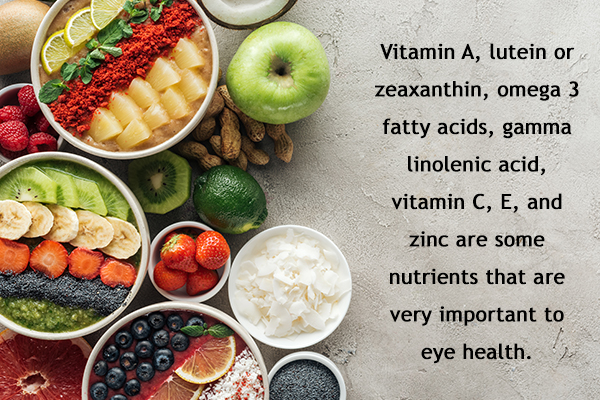

Here are some nutrients that are very important to eye health.
- Vitamin A is best consumed in its active form of beta carotene to improve eye health. A deficiency of this vitamin is commonly linked to night blindness and eye problems in children.
- Lutein and zeaxanthin are two antioxidants that are linked the most to eye health. Studies have shown they play a role in reducing the risk of age-related macular degeneration. (2)
- Omega 3 fatty acids have anti-inflammatory effects, and studies have found that they reduce the risk of diabetic retinopathy. (3)
- Gamma linolenic acid (GLA) is a type of omega-6 fatty acid. Unlike many omega-6s, which are considered to be pro-inflammatory, this one is considered anti-inflammatory. The blood vessels in the eyes are affected by inflammation just as much as the ones in the rest of the body.
- Vitamins C and E exhibit significant antioxidant properties that help repair the eye damage caused by oxidative stress.
- Zinc is an important nutrient for eye health. Zinc deficiency has been shown to contribute to an increased risk of developing age-related macular degeneration (4) later in life.
Best Foods for Eye Health
So where in your diet can you get the nutrients that are important for avoiding these common problems and promoting healthy eyes? In many foods! Here are 10 of them!
1. Spinach
Spinach is a dark leafy green that provides 60% of your daily vitamin A and 15% of your daily zinc per serving. Even better, much of that vitamin A is in the form of beta carotene. It also provides antioxidants.
2. Salmon
Salmon is packed with omega-3 fats that are great for your eyes. Plus, it contains antioxidants that are considered anti-inflammatory.
3. Carrot
Carrots are a great source of vitamin A in the beta carotene form, and they also contain lutein, zeaxanthin, and some vitamin C. All these nutrients help improve your vision and reduce eye damage, so much so that it is said that eating carrots can help you see in the dark.
4. Blueberries
Blueberries can fulfill 24% of your vitamin C needs per serving. They contain a class of antioxidants called anthocyanins, which have been shown to have anti-inflammatory properties and also a role in eye health. (5)
Advertisements
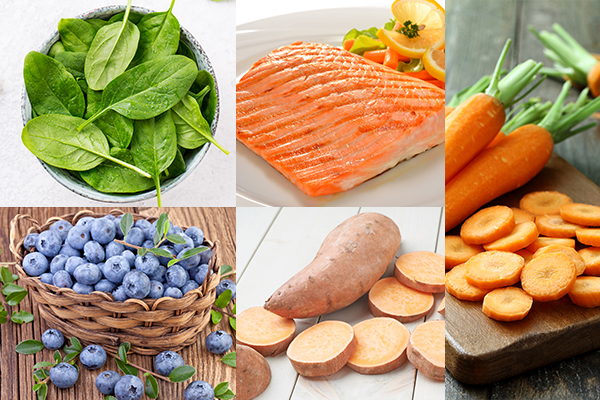
5. Sweet potatoes
Sweet potatoes are another great source of vitamin A, which is commonly found in orange fruits and vegetables. They also contain vitamin C. In addition, sweet potatoes are complex carbohydrates, meaning they digest slowly and do not spike your blood sugar the way a sugary drink would, for example.
6. Bell pepper
Bell peppers, particularly red and yellow ones, contain a lot of beta carotene. They also have vitamin E and some fiber, which helps stabilize your blood sugar levels.
7. Walnuts
Walnuts are replete with healthy fats! They provide 14% of your daily needs of alpha lipoic acid (ALA), which then converts in your body to EPA and DHA, the two types of omega-3 fatty acids that promote healthy inflammatory responses.
In addition, they are a good source of vitamin E and contain copper, another nutrient that is good for eye health.
8. Avocado
Avocado is a great food that supports eye health! Avocados contain vitamins E, C, A, and K, as well as fiber, copper, and zinc! They further contain healthy fat in the form of oleic acid, which has been shown to lower inflammation.
9. Broccoli
Broccoli is a terrific source of vitamin C. It also contains vitamin A, beta carotene, lutein, zeaxanthin, zinc, and copper.
Advertisements
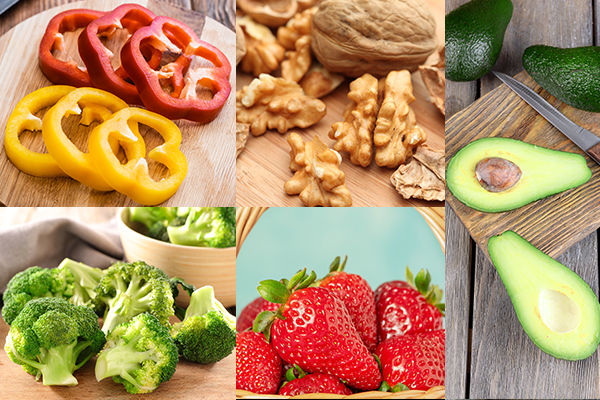
10. Strawberries
Strawberries contain 11% of your vitamin C needs and are abundant in copper and vitamin E. They contain an antioxidant class called procyonine, which is on the list of antioxidants that benefit eye health.
Other Foods Good for Eye Health
- Eggs, particularly the yolk, contain a high concentration of lutein.
- Fruits containing purple or red pigments, such as berries and currants, are suggested in maintaining eye health. (5)
Preventive Tips to Maintain Eye Health
- In addition to a healthy balanced diet, maintaining a healthy weight and exercising help to prevent complications of obesity. Some eye problems can be genetic, so it’s important to know your risk factors and history.
- Don’t smoke, as there is some evidence it can reduce the thickness of your retina. (6) As you age, focus on the nutrients discussed above to reduce the risk of degeneration. (7)
- Protecting your eyes from blue light, giving them a rest from staring at a screen, and wearing sunglasses and proper protection can help prevent eye injury. (8)
- Finally, getting regular eye exams is the best way to prevent problems so your optometrist can correct them early!
What Foods Should You Avoid When Thinking About Eye Health?
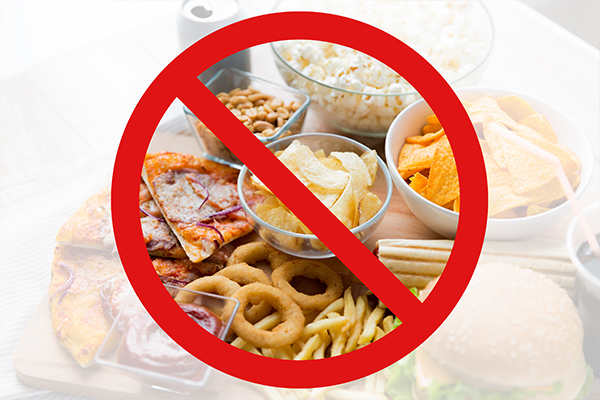
The health of the eyes is connected to your cardiovascular health. This means that eating a healthy diet and avoiding sugary, salty, or high-fat foods will not only reduce your risk of heart disease, diabetes, and hypertension but will also benefit your eyes.
There is also some evidence that alcohol use more than in moderation can lead to an increased risk of cataracts. (9)
Final Word
Your diet affects your eyes more than you think! The health of your eyes is connected to the health of your blood vessels, so it’s important to eat right, exercise, protect your eyes properly, and get regular eye exams so that any issues can be corrected early. May you open your eyes to this important connection!