
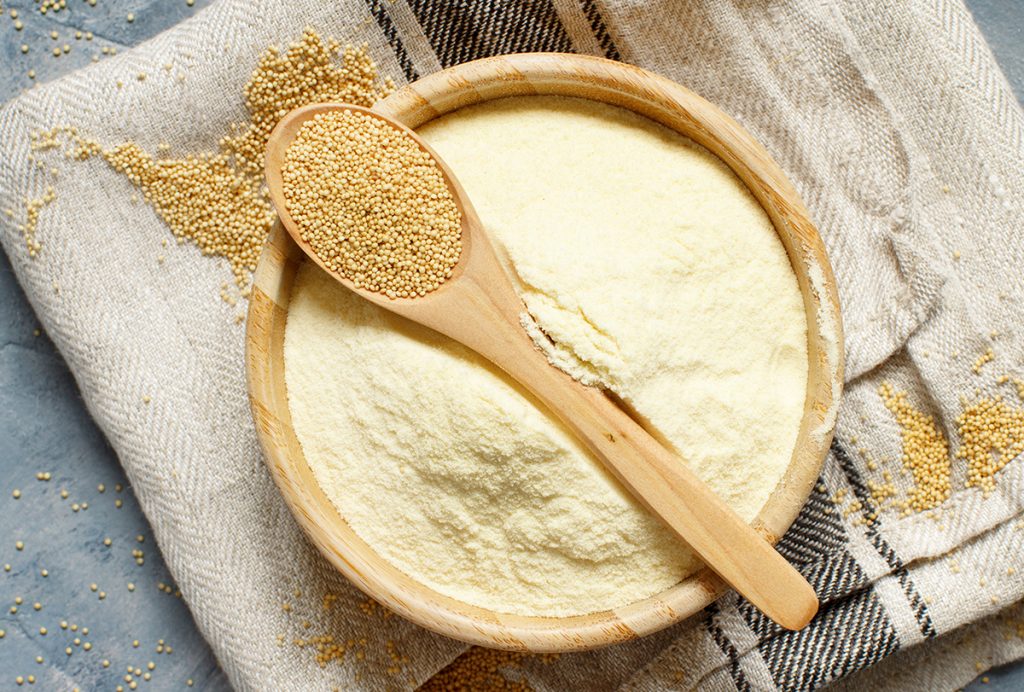
Wheat flour is broadly used to make breads and different staple dishes in lots of areas.
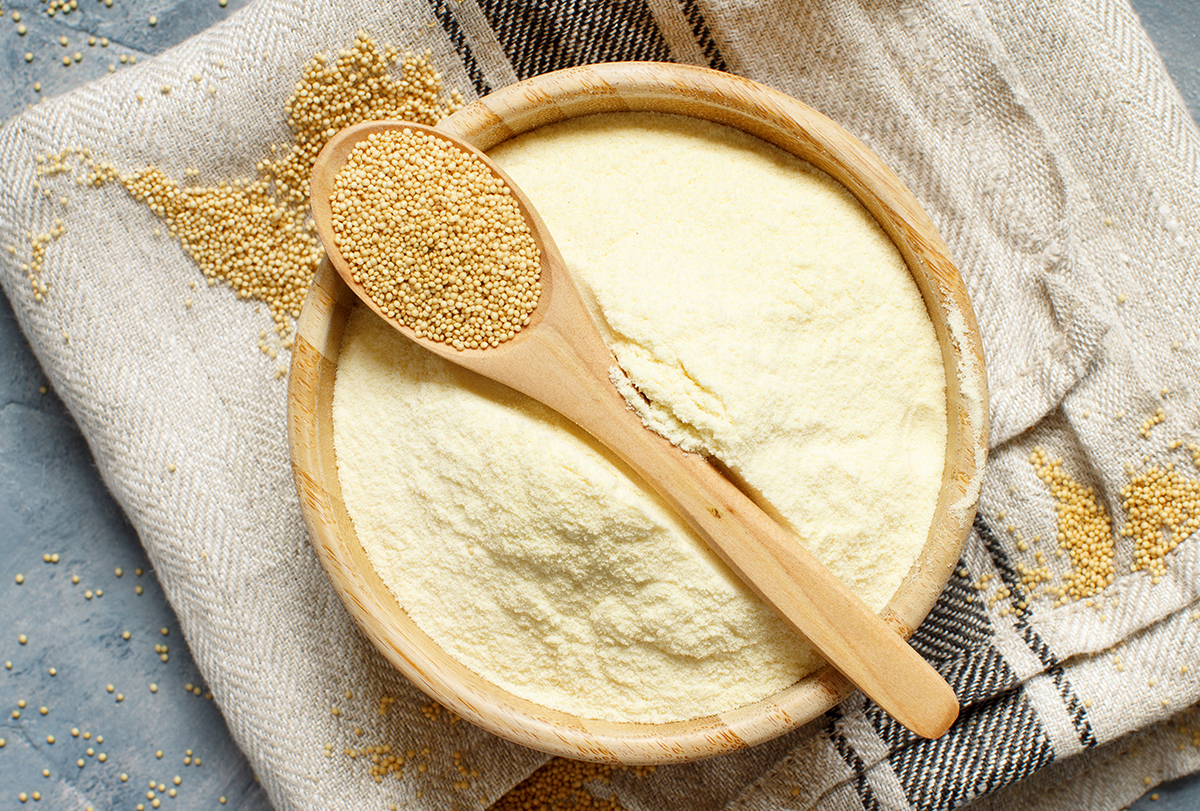

Domesticated over 10,000 years in the past, it has efficiently change into a supply of vitamin for many individuals. A few of wheat’s well being benefits embody advantages to coronary heart well being and a decreased danger of kind 2 diabetes. (1)
Individuals might select to eat options to wheat flour for numerous causes:
- Presence of wheat allergy, celiac illness, wheat-related problems, or nonceliac gluten insensitivity (1)
- To incorporate a wide range of cereals of their food plan
- So as to add extra nourishment to their meals
No matter your motive for choosing wheat flour options, you will need to do not forget that the elimination of wheat within the food plan isn’t obligatory except you might have a illness or allergy.
Ads
Alternate options to Wheat and Wheat Flour
As a substitute of wheat and wheat flour, you possibly can eat the next.
1. Amaranth and amaranth flour
Amaranth is taken into account a pseudo-cereal and has been used for a few years in numerous areas of the world.
Although starch is its important part, amaranth is a richer supply of protein than others within the cereal group. It incorporates insoluble fibers corresponding to lignin, cellulose, and hemicellulose which have useful results on the digestive system. (2)
Furthermore, amaranth flour is gluten-free and can be utilized in baking.
2. Oat and oat flour
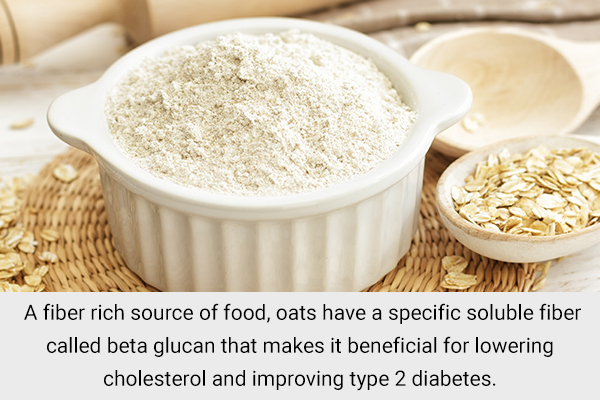

Oats have discovered their time within the highlight and rightly so.
Oats are ample in a selected soluble fiber referred to as beta glucan, which is useful for decreasing levels of cholesterol and bettering kind 2 diabetes. It additionally has an impression on immunity and improves the range of intestine microorganisms. (3)
Ads
The European Fee Regulation recommends oat and oat flour consumption by individuals with gluten allergy. (3)
3. Corn and maize flour
Maize and corn consult with the identical cereal crop. The USA, Brazil, and China produce the overwhelming majority of the whole maize. (4)
Maize flour is usually fortified with minerals, together with iron and zinc, and nutritional vitamins, together with folic acid, vitamin A, and different B nutritional vitamins. (4)
Maize can also be gluten-free and can be utilized to make tortillas, chips, and a few forms of bread. (5)
4. Rice and rice flour
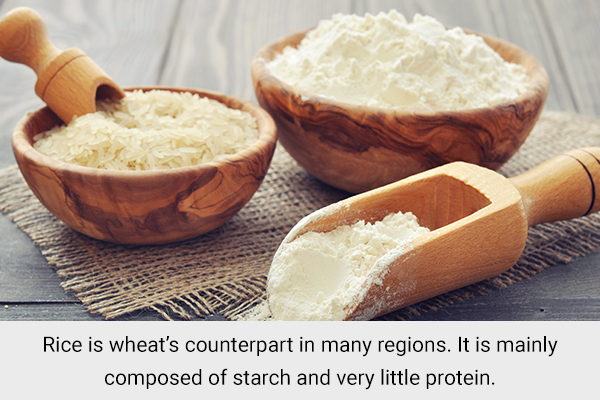
Rice is wheat’s counterpart in lots of areas. It’s primarily composed of starch and little or no protein. Nonetheless, not too long ago, protein-enriched rice flour is being utilized to make gluten-free baked items. (6)
Rice flour has a mushy texture and can be included within the food plan of the aged. (7)
Ads
5. Barley and barley flour
Barley grains are powerful to eat on their very own because of their extraordinarily excessive fiber content material. The grain and its flour are utilized in breads and pastas.
Barley additionally incorporates beta glucan and is useful in decreasing the danger of coronary heart illness and bettering kind 2 diabetes. It could additionally scale back the danger of stroke by bettering the degrees of excellent ldl cholesterol, making it an acceptable meals selection for the growing older inhabitants. (8)
Barley flour is usually comprised of sprouted barley grains to enhance its dietary worth, because the content material of nutritional vitamins (B1, B2, C) and proteins will increase upon germination. (9)
6. Millet and millet flour
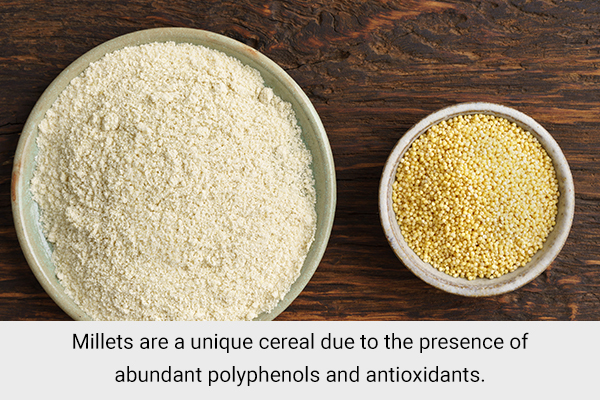
Millets are a singular cereal because of their ample and health-beneficial polyphenols and antioxidants. Finger millet is extra distinctive and ample than pearl millet. (10)
The well being advantages of millet embody prevention of tissue harm and wound restore, decreasing of levels of cholesterol, discount of dangers of coronary heart illness, and administration of blood sugar ranges. (10)
Millet flour can also be gluten-free and can be utilized to make flatbreads and pancakes.
Ads
7. Chickpea flour
Chickpea is the third most popularly consumed legume on the planet. As a result of it’s a legume, it’s gluten-free and can be utilized by individuals with gluten allergic reactions. (11)
Along with carbohydrates, chickpeas are chockful of protein, fat, nutritional vitamins, and minerals. (12) Nonetheless, chickpeas have some antinutrients. Thus, they’re often germinated earlier than milling into flour to enhance the provision of vitamins. (11)
8. Buckwheat flour
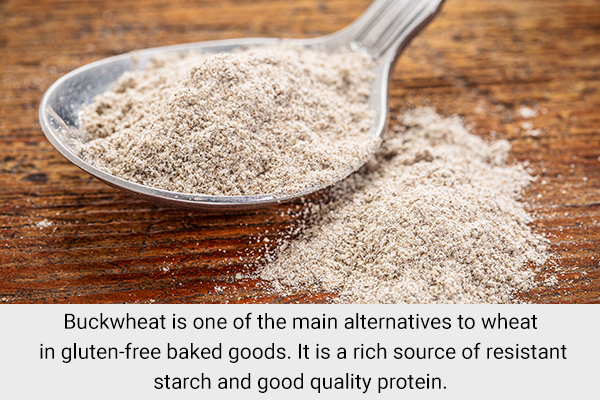
Buckwheat is likely one of the important options to wheat in gluten-free baked items. It’s a wealthy supply of resistant starch and good-quality protein.
Ads
Buckwheat additionally incorporates hint quantities of minerals together with zinc, copper, manganese, iron, potassium, phosphorus, and magnesium. It’s replete with fiber and polyphenolic compounds. (13)
Buckwheat breads can be enriched with seeds so as to add some micronutrient worth. (13)
9. Coconut flour
Coconut flour doesn’t come below the cereal group and is used a lot lesser in gluten-free merchandise than different flours.
Coconuts are nutrient dense with a excessive quantity of protein, fat, and fiber together with potassium, iron, selenium, and magnesium. (14)
Coconut flour has a major impression on coronary heart well being and may successfully scale back levels of cholesterol. Resulting from its low glycemic index (the speed at which meals will increase blood sugar ranges after consuming), it can be helpful in managing blood sugar ranges. (14)
Coconut flour will be mixed with different gluten-free flours for cookies and muffins to cut back value.
10. Almond flour
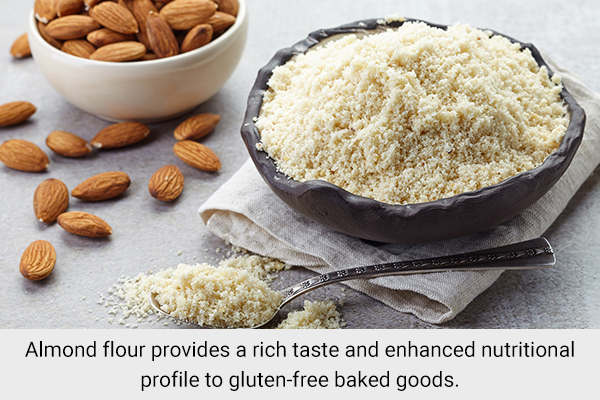
Almond flour offers a wealthy style and enhanced dietary profile to gluten-free baked items. It’s teeming with fiber, minerals, vitamin E, and polyphenols. (15)
Gluten-free merchandise comprised of almond flour do have higher acceptability by individuals.
Precautions to Think about
It is very important use gluten-free flours with care. If not cooked with correct hydration ranges, gluten-free flours may cause abdomen misery. Luckily, many recipes on-line present steering on prepare dinner gluten-free flours.
As well as, precaution have to be exercised with coconut flour and almond flour, as they’re nut flours and their excessive fiber and fats content material also can trigger abdomen misery.
Most-Requested Questions
Can tapioca flour or corn flour be used for gluten-free cooking/baking?
Tapioca flour is comprised of tapioca root, which is a wealthy starch. Equally, corn flour is made by drying the starch of maize. Whereas each of those flours can be utilized for gluten-free cooking, they add little or no dietary worth to meals.
Can I take advantage of gluten-free flour as a low-carb different?
The one gluten-free flours which are low in carbs are chickpea flour, almond flour, and coconut flour. Most different flours are obtained from cereal teams, so they’re nonetheless wealthy in carbohydrates.
Last Phrase
Gluten-free flours are getting used as wheat options for individuals with gluten and wheat allergic reactions.
Selecting wheat flour options which are wealthy in proteins and micronutrients can provide well being advantages corresponding to administration of blood sugar ranges, decreased danger of coronary heart illness, and decrease blood levels of cholesterol.
Relying in your desired style and value, you might have a wide range of choices to select from. You possibly can even mix totally different gluten-free flours for a richer dietary profile.